

2026-03-26 |
Beavers Reshape the Biodiversity Debate as Research Highlights their Ecological Impact
There are, in the broader conversation around biodiversity loss, few subjects that provoke quite such a mixture of enthusiasm and resistance as the return of the beaver.
Once hunted to the edge of extinction across Europe and North America, the beaver's gradual reappearance has been framed as both a solution and, in some quarters, a complication. New research suggests the balance of that argument may be shifting decisively in one direction.
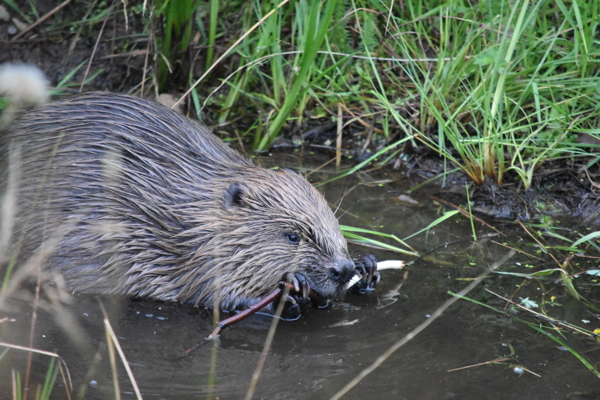
The study, led by Dr Alan Law of the University of Stirling's Faculty of Natural Sciences, focuses not on sentiment but on measurable impact. Across 18 wetland sites in Evo, Finland — nine shaped by beavers and nine without — the results point to a clear ecological divergence. Beaver-created wetlands supported, on average, 19 per cent more species, a figure that begins to quantify what has long been observed anecdotally.
More revealing still is the distribution of those species. Of the 380 recorded, 105 were found exclusively in beaver wetlands, compared to 65 confined to sites without them. The remainder were shared, but the distinction hints at something deeper: not merely an increase in numbers, but a broadening of ecological opportunity.

Dr Law, a lecturer in Nature-Based Solutions, framed the findings in practical terms: “Biodiversity is good for humans as we depend on it, whether directly or indirectly, for essential resources such as food and clean water. A species such as beaver that improves biodiversity via restoring our environments for free should be welcomed with open arms.
“We need to learn to live alongside beavers again, accept that parts of our environment are under new hydrological management by an experienced engineer, and provide time and space to fully realise the wider benefits that come from this.”
The phrase “experienced engineer” is not used lightly. Beavers alter landscapes in ways that are both visible and complex, felling trees, constructing dams and reshaping water flow to create a mosaic of habitats. It is this combination — shallow water, woody debris, altered channels — that appears to underpin the increase in biodiversity, particularly among plants, beetles and true flies. Plant functional diversity, a measure of how species grow and interact with resources, was found to be 55 per cent higher in beaver wetlands.
The methodology itself reflects the evolution of ecological study. Using environmental DNA sampling, researchers were able to detect both vertebrate and invertebrate life through traces left in the water, supplementing this with traditional field surveys of plants and aquatic beetles. The result is a dataset that captures both presence and pattern, offering a more complete picture of these engineered ecosystems.
For Professor Nigel Willby, co-author of the study, the implications extend beyond the specific sites examined: “The planet is experiencing a biodiversity crisis. To stop biodiversity loss, it’s not enough to just protect and conserve land - we also urgently need to restore the natural processes that create and maintain habitat, and this includes the ecosystem engineering activities of beavers.
“Beavers physically reshape landscapes by selectively felling trees, digging canals, grazing plants and building dams on small streams. The unique combination of shallow water, dead or fallen trees, woody dams and grazing or digging by beavers themselves makes their wetlands ultra-biodiverse, but also impossible to mimic.”
It is that final point which perhaps carries the most weight. Conservation, increasingly, is not only about preservation but about reinstatement — restoring processes rather than simply protecting outcomes. In that context, the beaver is less a symbol than a mechanism, one whose reintroduction offers not just a return to the past, but a recalibration of what modern ecosystems might yet become.
Wetland landscape transformation by beavers: responses of biodiversity and functional indicators at multiple scale was published in Landscape Ecology.
Work was led by the University of Stirling in partnership with the University of Helsinki, University of Hull, Aquatic Coleoptera Conservation Trust and UK Centre for Ecology and Hydrology.
Fieldwork in Finland was funded by the Carnegie Trust for the Universities of Scotland. Funding from Biotechnology and Biological Sciences Research Council (BBSRC) allowed a follow-up workshop in Finland for all authors to complete the first manuscript draft.Natural England and Scotland’s Hydro Nation Scholars programme provided further support.