2011-03-29
A new docility breeding value to help breeders and buyers of Limousin cattle is being launched for beef producers in the UK for the first time.
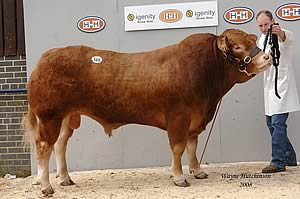
Haltcliffe Bill
 |
Developed collaboratively over the last three years by Limousin breeders, the British Limousin Cattle Society, Signet and Egenes, with funding support from the Biosciences Knowledge Transfer Network, the docility estimated breeding value (EBV) now means that beef producers will be able to select animals on the basis of their genetic merit for calmness when handled, rather than relying on anecdotal evidence and chance.
Alison Glasgow, breeding specialist with Signet – part of EBLEX – which delivers the evaluation service, said: “Various surveys carried out amongst commercial calf producers unanimously identify docility as a main selection driver when purchasing decisions are being made. This new EBV provides a layer of independent information on an animal’s likely disposition, based on what we know about it and its relatives and will assist Limousin breeders in the selection decisions that will meet this market demand.”
Docility is defined as response to being handled in a crush or similar restrained environment, like a race. It is approximately 40 per cent heritable (i.e. approximately 40 per cent of observed behaviour is under genetic control). The remaining 60 per cent is subject to environmental influence and learning. This level of heritability is considered moderate and is comparable with many of the growth and carcase traits that the industry is more familiar with. The obvious benefits of handling calmer cows are human safety and animal welfare, but there are some wider benefits that may not be apparent upon first consideration. Docility is associated with increases in herd production, since there are strong correlations with the growth and carcase traits, as well as decreases in herd costs, through reductions in labour and management costs.
Alison added: “Rapid gain within a population can be made once breeders have information such as EBVs to assist their decisions. In Australia, for example, the Limousin breed improved the proportion of animals that could be considered calm in the population by 16 to 17 per cent over an 11-year period from when it first started to evaluate docility. Production systems in the UK are increasingly relying on fewer staff and this development is with an eye on how the demands of commercial producers’ are changing when it comes to buying replacement breeding stock.”
Iain Kerr, chief executive of the British Limousin Cattle Society, said: “The introduction of this docility EBV is another significant step in the society’s commitment to continuous breed improvement and the provision of easy care cattle to the commercial beef producer.
“Docility in beef cattle is associated with overall performance, higher daily gains, health and carcase quality, and as such is very much a trait of economic importance.”
 Plan Ahead to Manage Future Feed Cost Risks Plan Ahead to Manage Future Feed Cost Risks
2011 Soil Nitrogen Supply Looks Low
No Substitute for Good Agronomy
|